 Cassandra.org
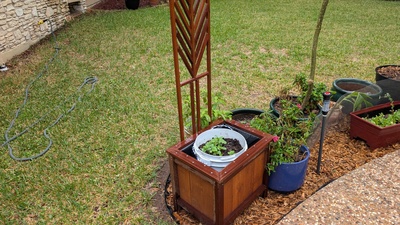
Completed planter with trellis
Background
While working on Front Entry Trellis Project, I needed to make spare parts. The trellis part is somewhat intricate requiring special jigs for cutting the angles and holes. I wanted spare parts to make sure I did not have to redo all the setup work to create new ones should something go wrong. That trellis is a repeating pattern of the same design three times. I wound up with enough spare pieces to almost make an entire fourth pattern. Once I was done with that, I started thinking about ways I might use that same pattern. The idea I came up with was to create a planter with the trellis on the back.
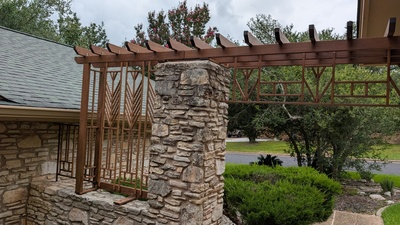
Front Entry Trellis
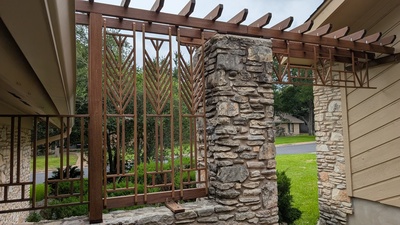
Front Entry Trellis (alt)
Frame Construction
A mortise and tenon joint is among the strongest. Since I had previously invested in a mortise machine, I went with that as the main frame's joinery.
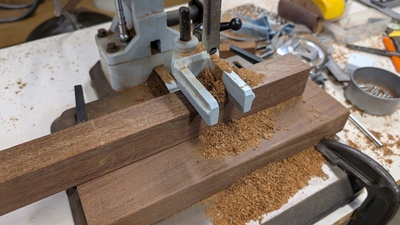
Adding mortises to legs
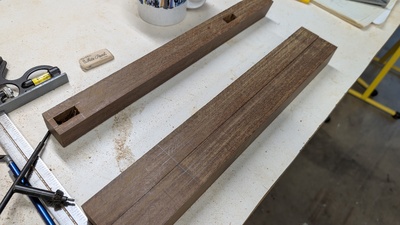
Legs with mortises in progress
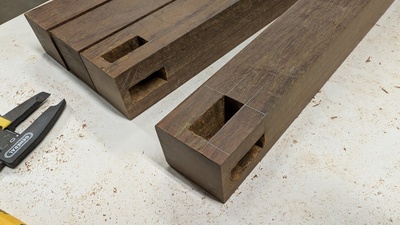
Leg mortise closeup
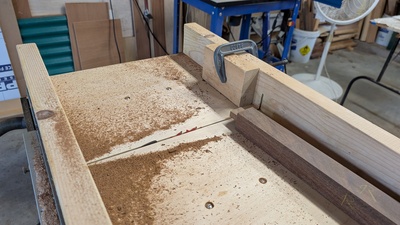
Cutting tenons
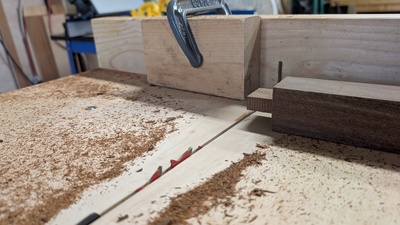
Cutting tenons closeup
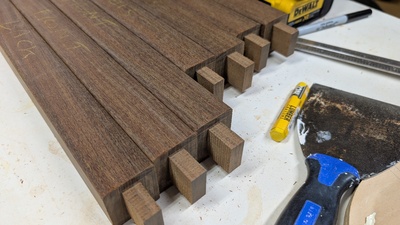
All tenons cut
Because the legs are that that thick and have tenons coming in two sides, the motises intersected. This meant I would need to bevel the tenons so they did not obstruct each other.
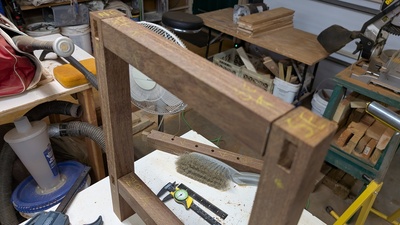
Dry fit of frame
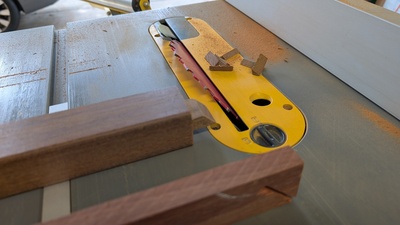
Beveling tenons
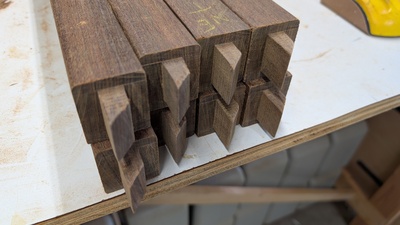
Beveled tenons closeup
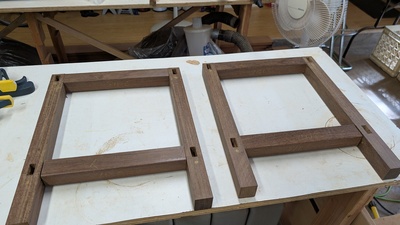
Dry fit frame sides
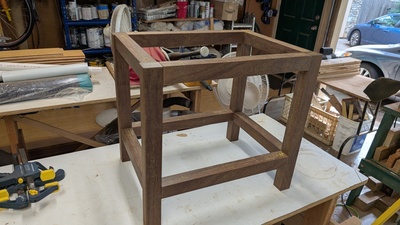
Dry fit of full frame
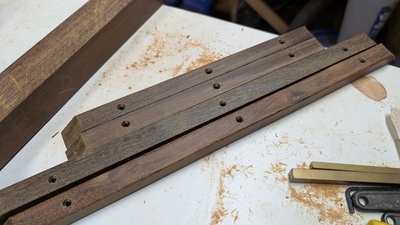
Inside floor parts with screw holes
The frame wood is Ipe which is great as a long lasting outdoor wood. It is very dense and a little oily. However, it is those same attributes that make it not great for gluing. Usually, a glued mortise and tenon joint is incredibly strong. Since this was Ipe wood and in an outdoor environment, I did not want to rely on glue, so I chose to put screws into the mortise to hold in the tenons.
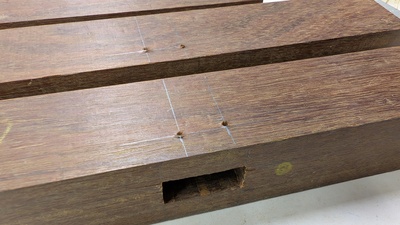
Pre-drilled screws into mortises
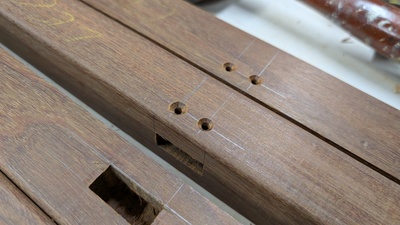
Holes and countersize for motises
Trellis Fitting
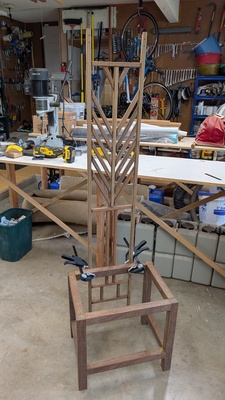
Trellis positioning (lower)
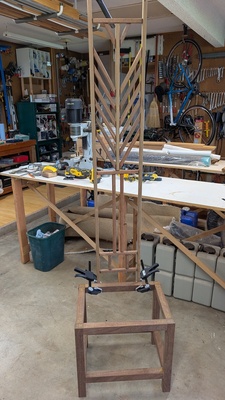
Trellis positioning (too high)
I had already constructed the (fourth) trellis part when doing the Front Entry Trellis Project. My first idea was to mount it so that the full trellis design was visible. Two issue with that:
- This made the trellis unwieldy high.
- It did not allow a good way to connect to the planter frame.
I opted to lower it and that solved both problems. I could attached the trellis at both the top and bottom of the planter base.
Planter Sides and Bottom
To match the motif of the deck furniture I built (see Deck Furniture Project), I combined the Ipe frame and trellis with cedar boards for the planter sides and bottom. There was some tricky geometry from the constraint that I wanted the inside of the planter to not have any ridges. To make the cedar boards sit between the Ipe frame pieces and be flush inside, I needed to saw some slots and add small rabbets to the cedar boards.
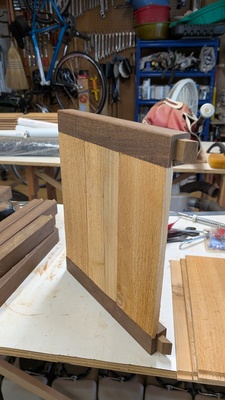
Cedar side boards with rabbets
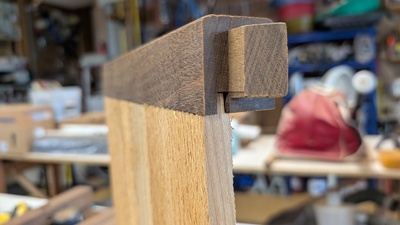
Side board rabbets closeup
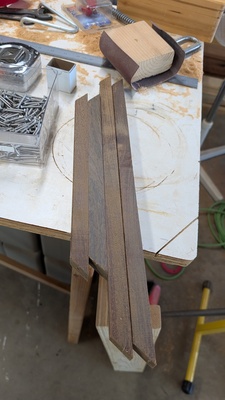
Inside floor frame pieces
Finishing
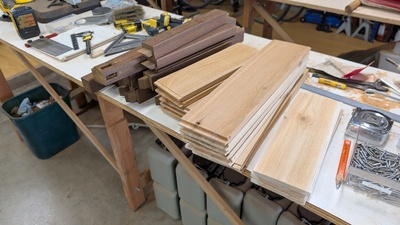
All pieces before assembly
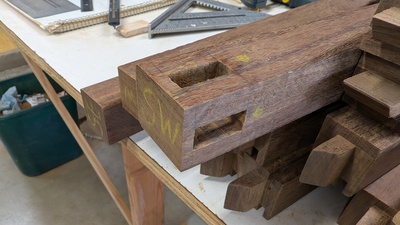
Leg closeup before assembly
Cedar is a good, but not great wood for outdoor use. However, if you stain the cedar, it becomes very long lasting.
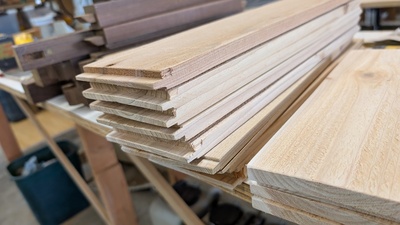
Cedar sides before assembly
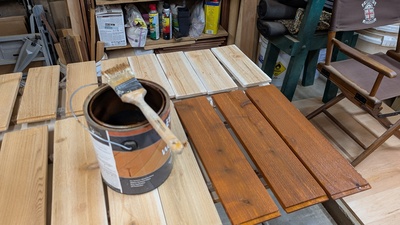
Staining cedar side boards
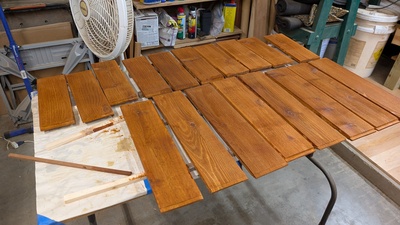
All cedar boards after staining
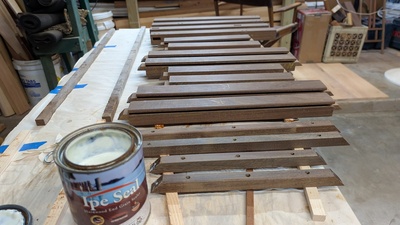
All Ipe parts being end sealed
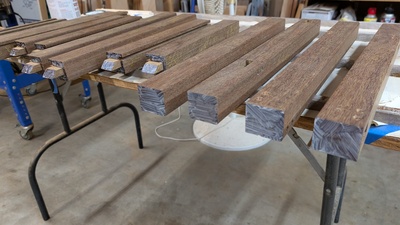
Sealing Ipe wood ends
Ipe wood has one negative property where the ends can "check" over time. This means that small cracks show up in the end so the boards from the changes in moisture and expansion and contraction. These cracks are not a structural issue and it does not result in any splintering: it is just visually unsatisfying. Sealing the ends of Ipe would is the recommended course of action.
Frame Assembly
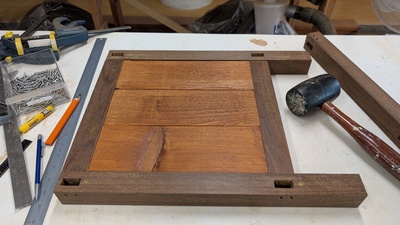
First side assembled
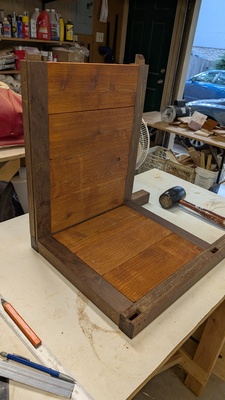
Assembling front and side
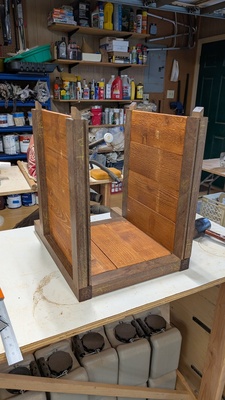
Front back and side assembled.
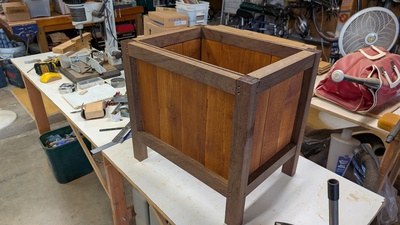
Frame after assembly
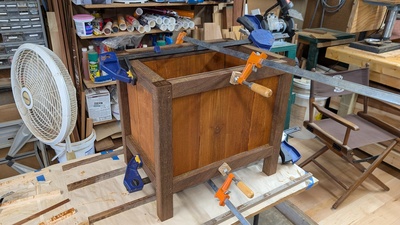
Clamped frame assembly
During assembly, I found a design flaw. The mortises were a little too close to the top ends of the legs. Since I made fairly tight fitting tenons, this resulted in some cracking and chipping at the top. A top ledge would be screwed down over these, so it would not be seem and it was not compromising the strength very much, so I decided to live with it.
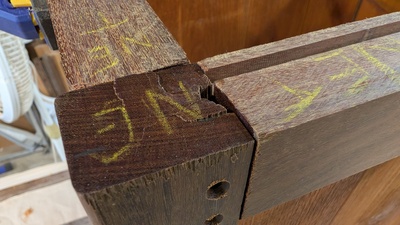
Crack and chips in leg
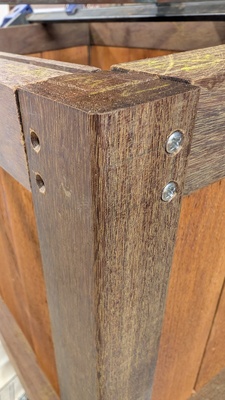
Cracked leg side view closeup
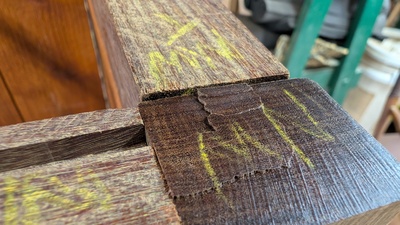
Cracked leg closeup
Floor Assembly
I some smaller Ipe support frame for the floor bottom boards and those screwed into those support pieces.
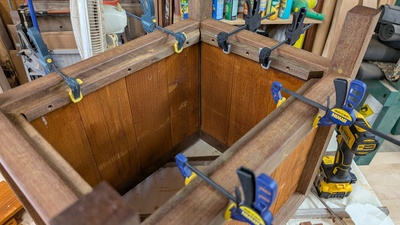
Floor piece assembly
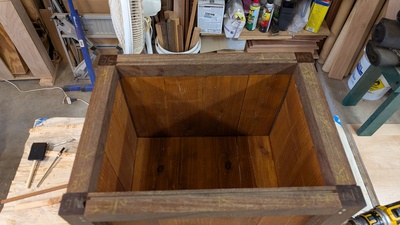
Dry fit bottom boards
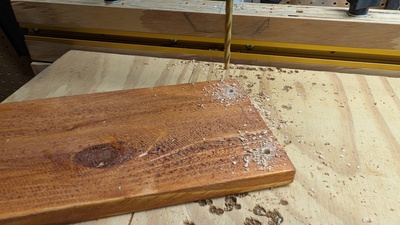
Drilling bottom boards for screws
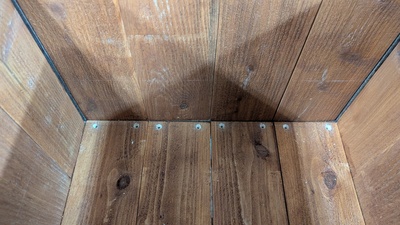
Assembling bottom boards
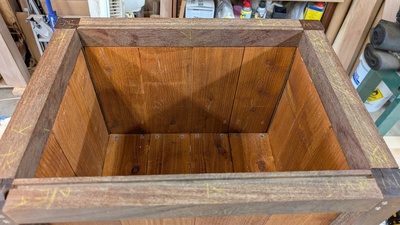
Bottom install finished
Frame Finished
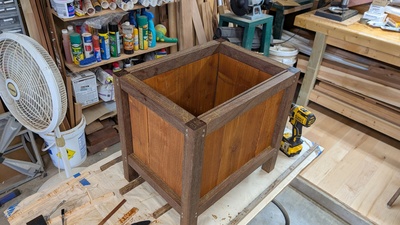
Planter frame finished
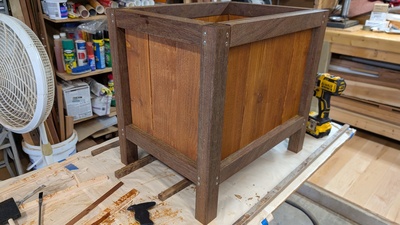
Planter frame finished (closer)
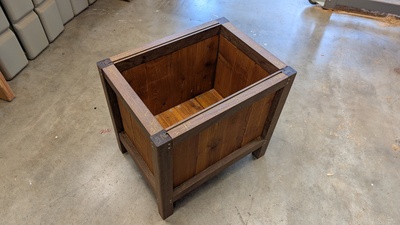
Planter frame finished (top view)
Top Edge Assembly
The top ledge pieces were designed to overhang the sides a little bit on the outside (but flush with walls on inside). A minor problem was in the back of the ledge where the trellis attached. I wanted the trellis attached to the frame, not the ledge, so the overhang was in the way. The solution was simple though: I just cut away the overhang of the ledge in the area the trellis would sit.
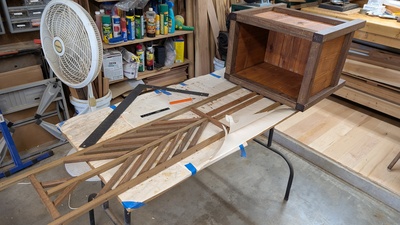
Positioning trellis for ledge cutout
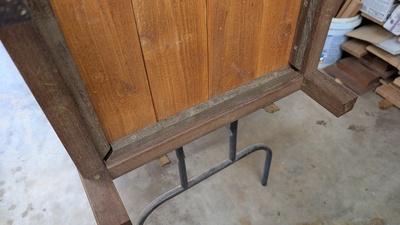
Trellis bottom ends protruding
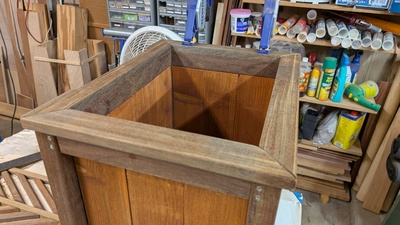
Positioning top ledge pieces
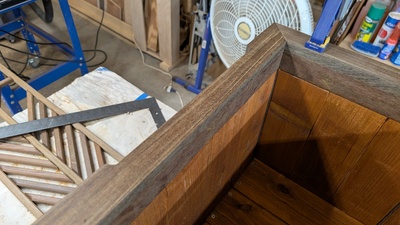
Notched cutout for trellis
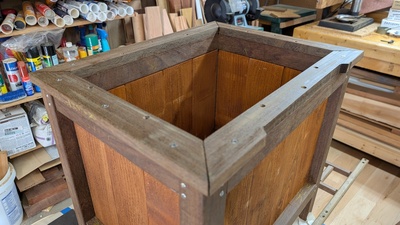
All top ledge pieces assembled
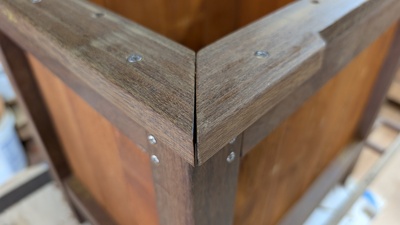
Top edge corner closeup
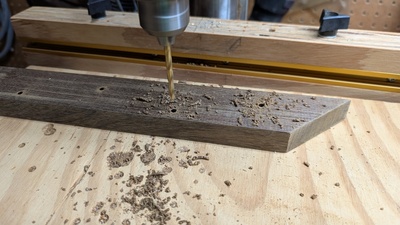
Drilling top ledge piece screw holes
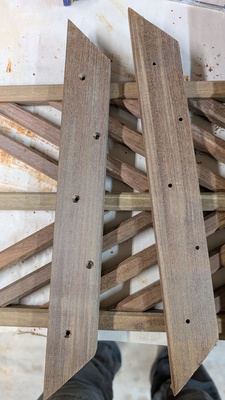
Top ledge mounting holes
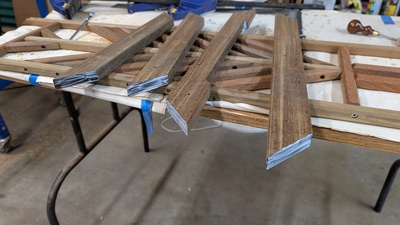
End sealing for top ledge pieces
Trellis Attachment
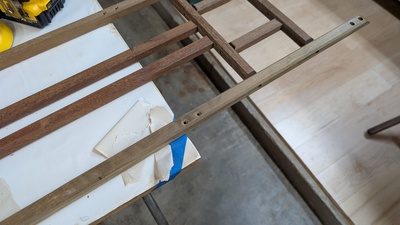
Trellis connecting screw holes
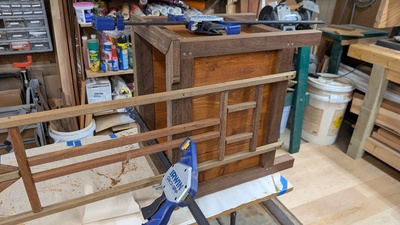
Clamping trellis for assembly
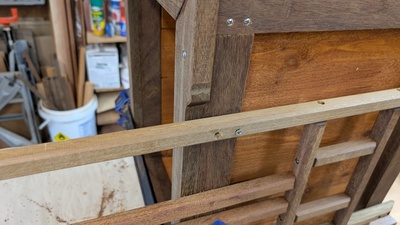
Trellis mounting screws closeup
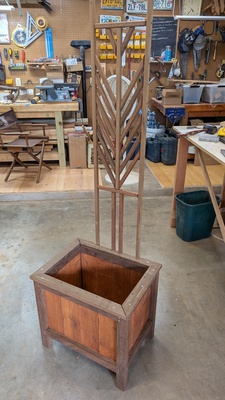
After trellis installed
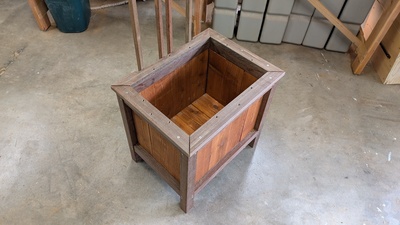
After trellis installed (top view)
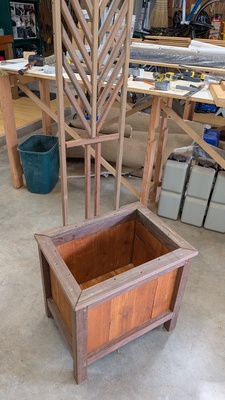
Finished planter (top closeup)
Liner Installation
Having the wood of the planter in direct contact with soil is not going to be good for its longevity. I decided to add pond liner material to the inside. However, I also need a way for water to drain, so needs some holes. I used bulkhead fittings over the liner to prevent water going through the holes in the liner from seeping into the wood.
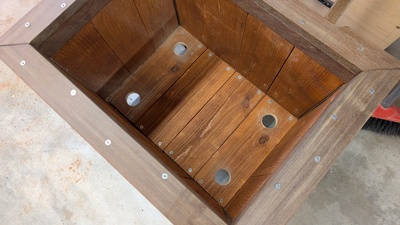
Finished planter (floor closeup)
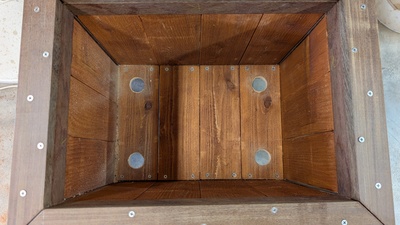
Finished planter (floor alt)
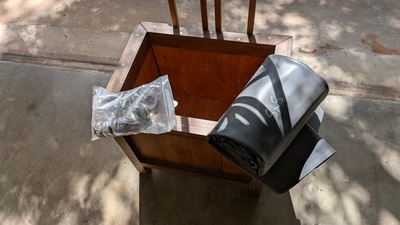
Liner and bulkhead fittings
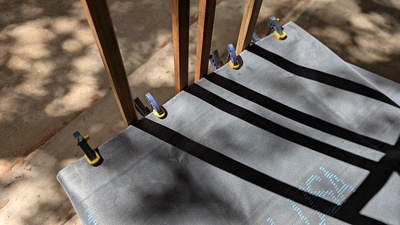
Liner install beginning
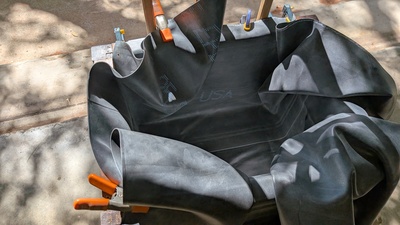
Liner install clamping
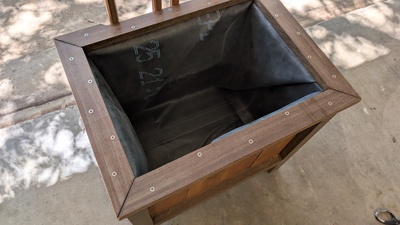
After liner installed
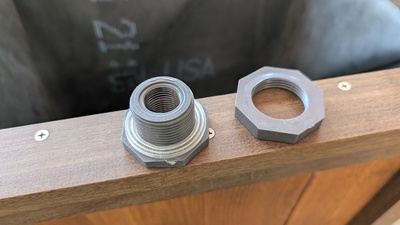
Bulkhead fitting closeup
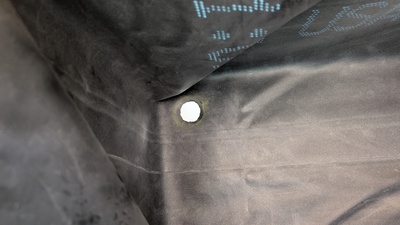
Liner hole for bulkhead fitting
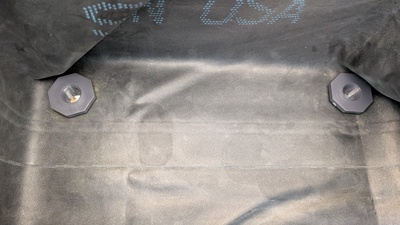
Bulkhead fittings installed
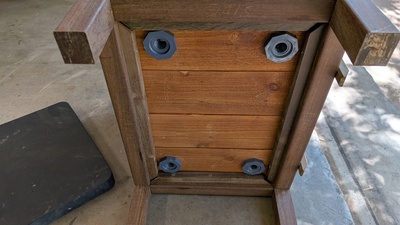
Bulkhead fittings from underneath
Completion
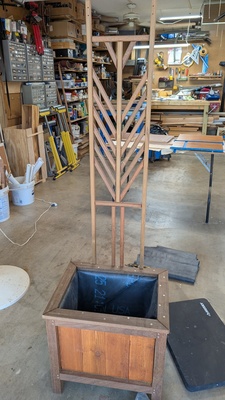
Completed planter and trellis
Completed planter with trellis
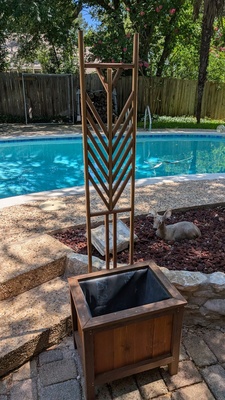
Completed and outside