 Cassandra.org
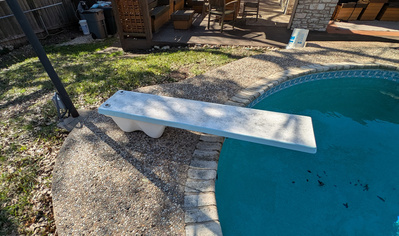
Before
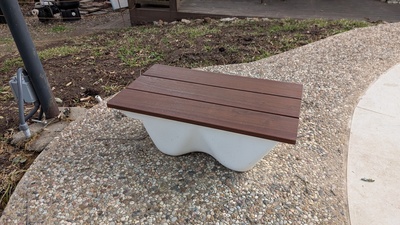
After
Background
Our pool has a diving board. That's neat or dangerous depending on your body mass. Here's the approximate pool construction codes/guidelines for a diving board like the one I have (had) and how my pool compares:
- Diving Well Depth = 8.5 to 9.0 feet. Mine is at most 7.5 feet.
- Forward Clearance = 16 to 22 feet. At best mine is 12 feet.
- Horizontal Width = minimum 16 feet. I have about 8 feet before it slopes up to the walls.
And then there is the empirical evidence. When I would dive from the board, I had to very consciously dive in way that immediately breaks the water and specifically use my hands to detect the bottom. Any lack of concentration on my part, or someone without the local knowledge would risk serious head injury. It's probably fine for small children though.
Another anecdote from when home insurance rates doubled overnight some years back. I decided to call around to find a better deal. Two companies literally hung up on me when I told them I had a diving board.
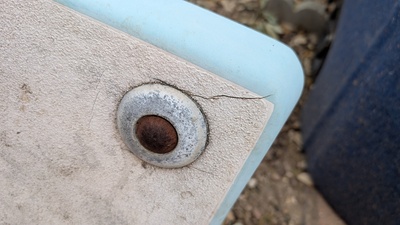
Diving board crack
Since there is a "neat" element to having a diving board, and kids love it, I had only lightly contemplated removing it over the years, usually in the context of pleasing the insurance companies. However, the final straw was when I saw this crack in the board. Now I had a real safety issue ... for all body masses.
We never really used the diving board much. For diving that is. It has very often served as a nice seating location or bench to rest pool chemicals, buckets, lawn tools, power tools, etc. So removing the diving board would remove that feature form the property. I decided to reuse the diving board base and make it into just a bench. This was driving half by the usefulness of a bench, and half by not wanting to try to unbolt the base from the concrete deck and deal with the aftermath of rusted bolts and chipped concrete.
Diving Board Removal
The diving board itself attaches to a base with just two screws. They were fairly rusted looking, so I dosed them with some liquid penetrant first. One bolt came off semi-easily given all the rust. The other bolt snapped after a couple turns. After removing the board, I saw that bolt was rusted nearly all the way through. Another hidden hazard that reaffirmed my decision to remove it.
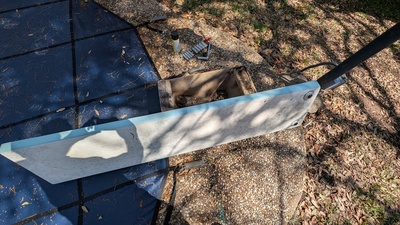
Diving board removed
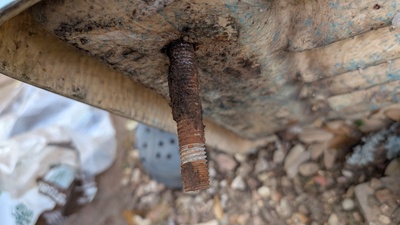
Diving bolt bolt (the good one)
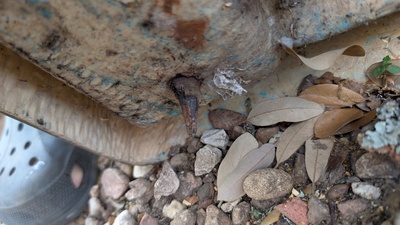
Diving board bolt rusted away
I had observed over the years, wasps were particularly fond of our diving board. The inside of the base was a mess.
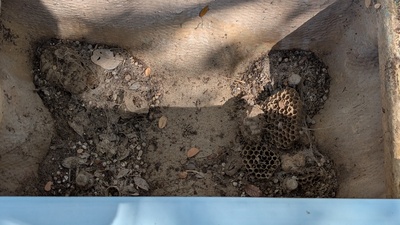
Diving board base accumulations
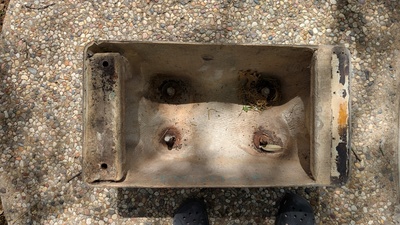
Bench base after cleaning
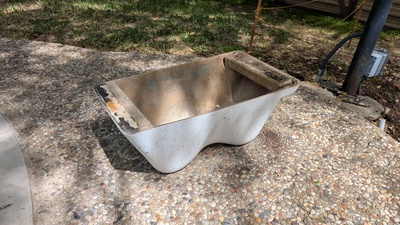
Bench base (bolted to concrete)
Bench Top Backing
I was not keep on building another wasp habitat and I needed something that was outdoor and pool compatible, so for the bench top, I chose some 1/2 inch HDPE plastic board. I would reuse the two bolts holes to anchor it and then caulk the underside to seal it.
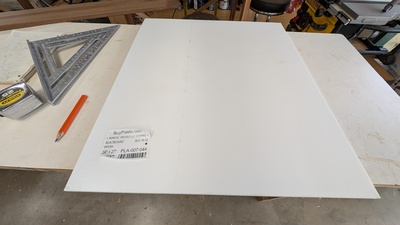
HDPE board for bench top
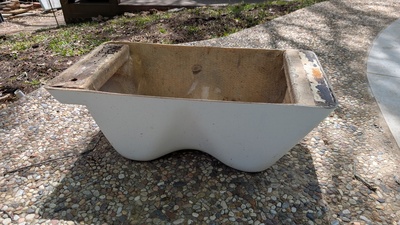
Bench base closeup
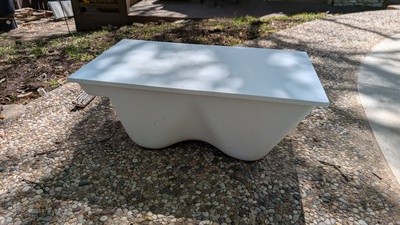
Checking bench top fit (closer)
I was using lag bolts that has a square area by the head to prevent rotation while tightening the bolt. I wanted the lag bolts to sit flush though, so that meant drilling the holes and then chiseling them to be square.
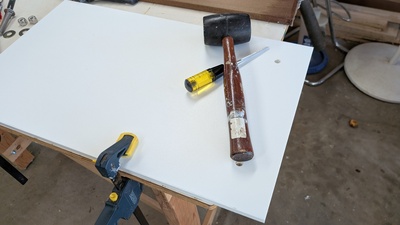
Drilled mouting bolt holes
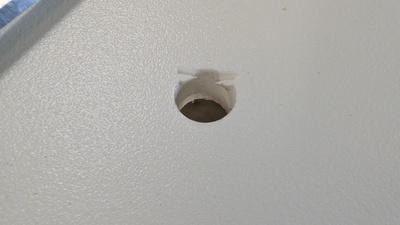
Squaring mounting bolt holes
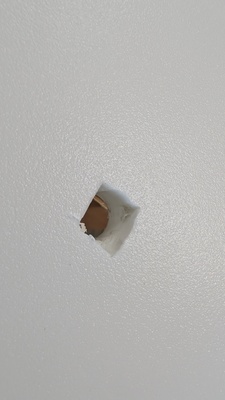
Lag bot square hole closeup
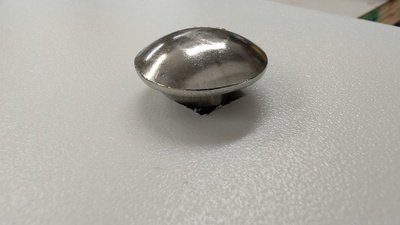
Lag bolt closeup
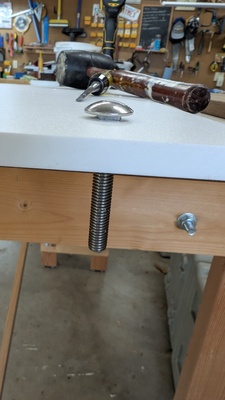
Lag bolt in top (side view)
Bench Top Surface
The white HDPE plastic would sort of match the pool motif, but my wife was not so crazy about that look. We decided to add some Ipe wood boards to the top to match our deck and deck furniture. Ipe is a very hard and resitant wood, so would last a long time. It's not cheap though. I only needed one 8 foot board and that was $50.
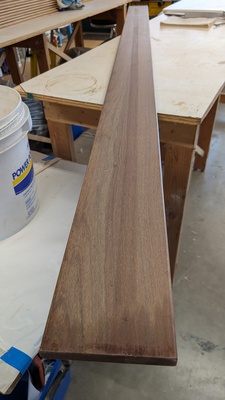
Ipe board for bench surface
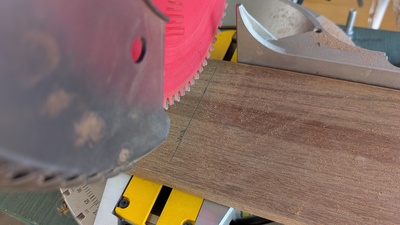
Cutting Ipe board
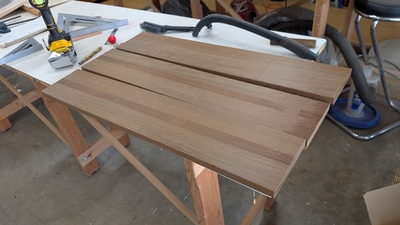
Cut Ipe surface pieces
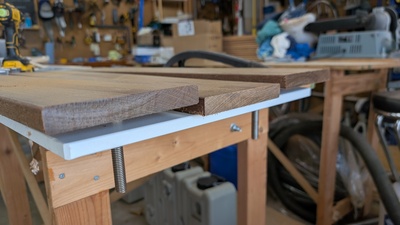
Ipe boards and lag bolt conflicts
One complication of just screwing the Ipe boards to the plastic top was the lag bolts. Even when sitting down in square hole, they have a rounded top that protrudes. I would need the Ipe boards to have a cutout area for the lag bolt heads to it in so that the boards rested flat.
The cutout could not go all the way through, so I needed to use a Forstner bit to cut a flat-bottomed hole to the prescribed depth. However, the largest bit I had was 1 inch and I needed 1.25 inches. I decided I would cut the 1 inch area, then use a Dremel tool to carve out the remaining shape I needed. I needed to first position and align the boards (without the lag bolts) so I could mark where the cutouts needed to be located.
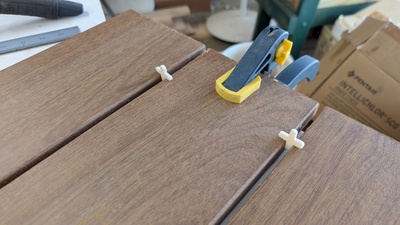
Aligning Ipe boards to top closeup
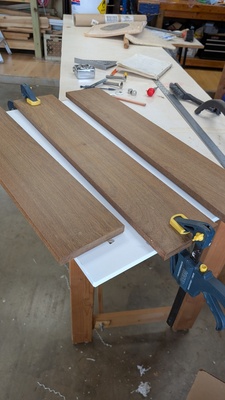
Aligning Ipe boards to top
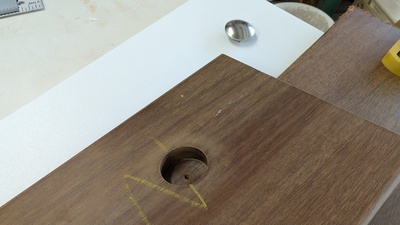
Drilling lag bolt recess
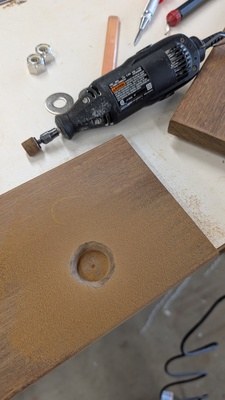
Widening lag bolt recess
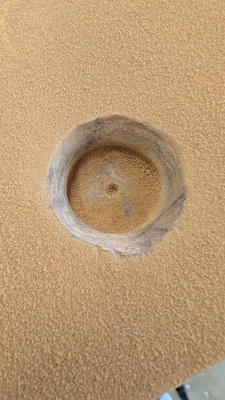
Lag bolt recess closeup
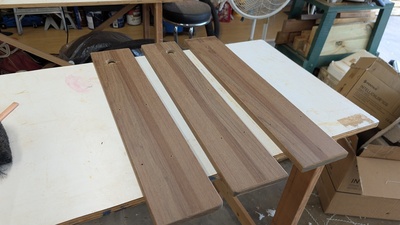
Ipe boards with lag bolt recesses
Sealing the ends and oiling are some best practices for using Ipe. The ends prevent end cracks and the oil is a little extra protection and make it look nicer.
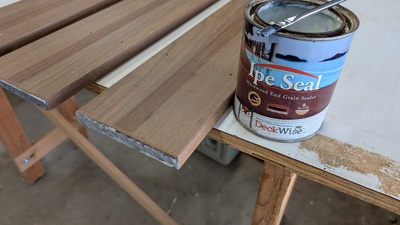
Sealing ends of Ipe boards
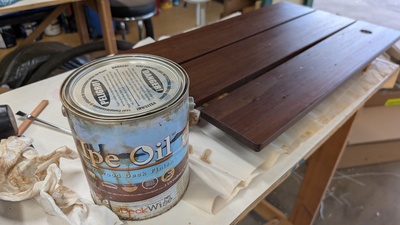
Oiling Ipe boards
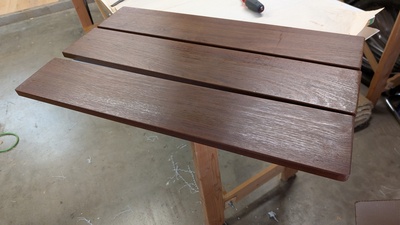
Oiled Ipe boards (top surfaces)
Assembly
Last step was assembling everything: putting in lag bolts, then screwing in the Ipe boards to the HDPE plastic top. For better appearances and weathering, I wanted the screws to be on the underside.
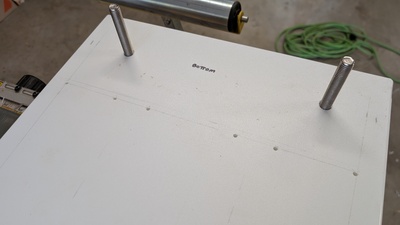
Locating Ipe board mounting screws
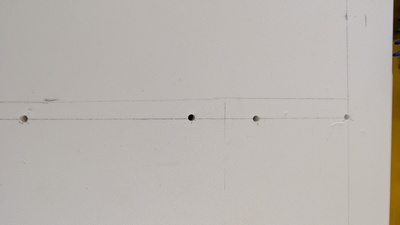
Ipe board mounting screws
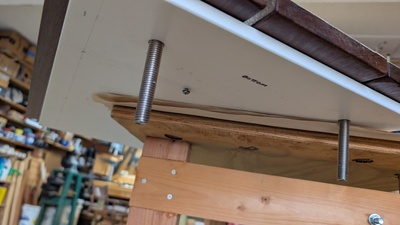
Screws for Ipe from underside
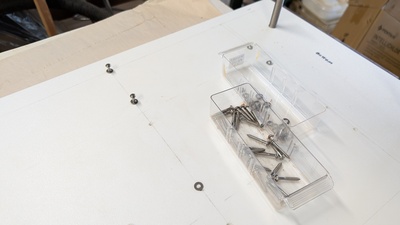
Fastening Ipe boards
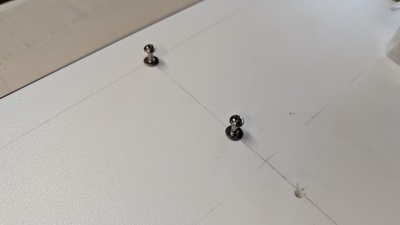
Ipe fasteners closeup
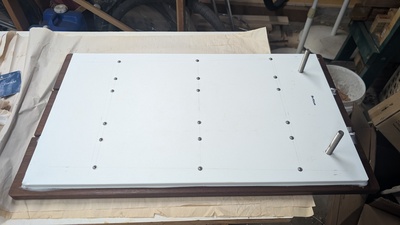
All Ipe fasteners on underside
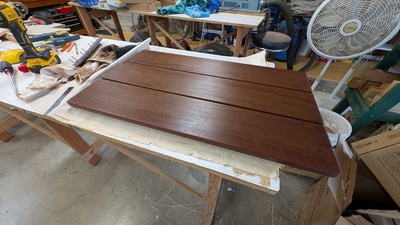
Final top assembly
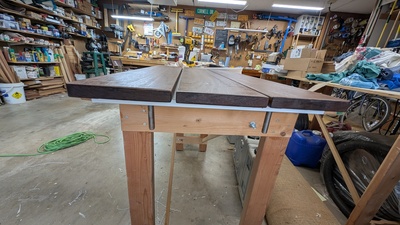
Final top assembly (end view)
Final Result
To affix the top, I used nuts with nylon inserts and a washer. All the hardware was 316 stainless steel (a.k.a., marine grade). I used some latex caulking for the underside to keep the wasps at bay.
The final result of this project is not great visually. The diving board base is kind of a weird shape and you notice it more when there is no long diving board surface to draw your eye. However, having a bench-like surface where the diving board was located has been used many, many times over the years. So in this case, the functionality of that makes up for the deficient aesthetics.
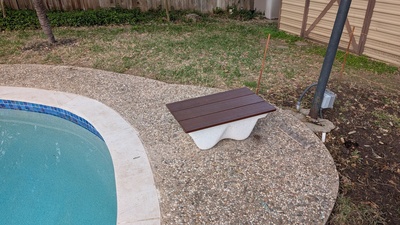
Bench top finished (north view)
Bench top finished (south view)
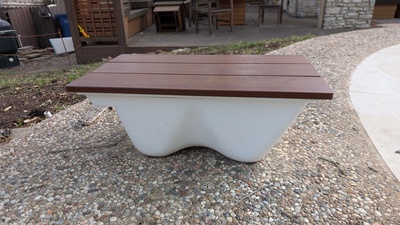
Bench top finished (south low view)